Planning Around Time of Day and Weather
Conditions change how fish behave, and the game simulates shifting time and weather. These tips explain how to use that when planning a big fish session.
Why Conditions Matter
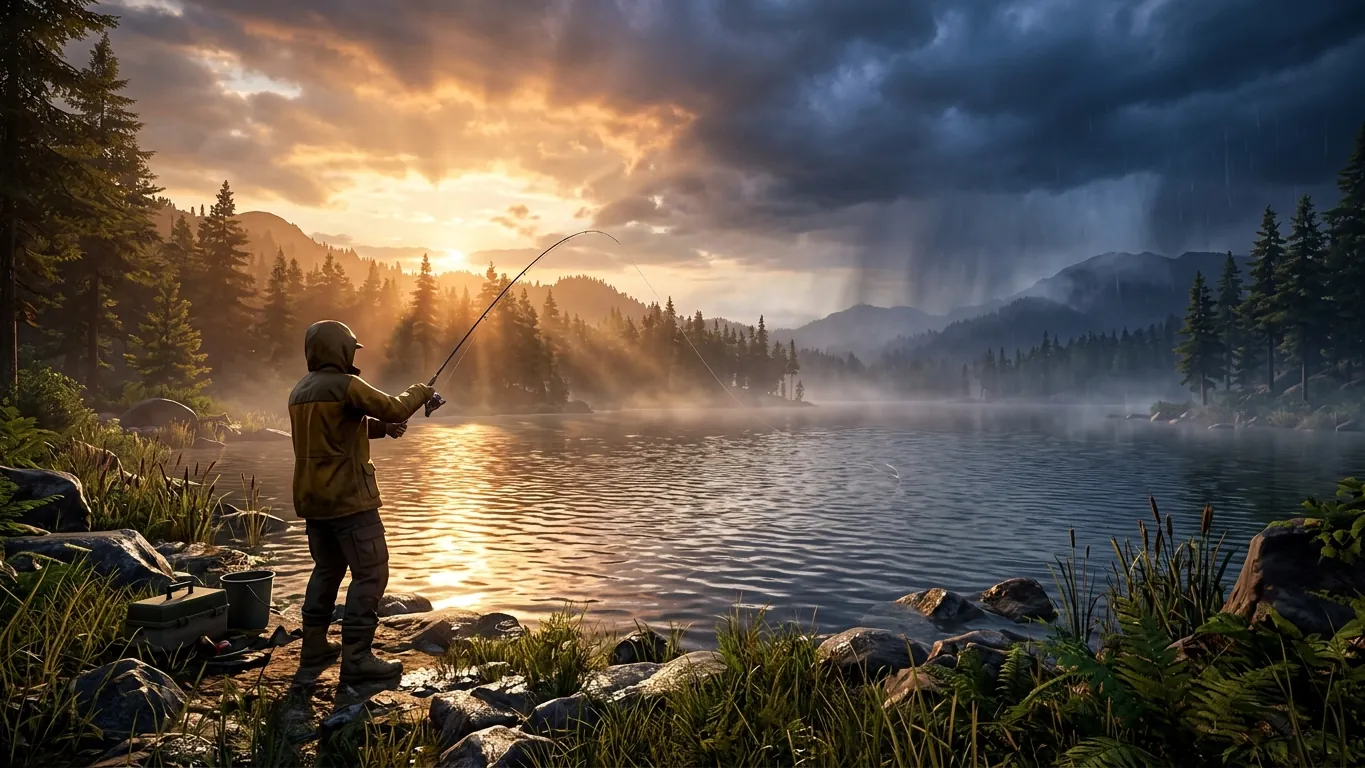
Fish in the game do not behave the same way all day. Activity, depth and feeding can change as time passes and as weather shifts. For anyone hunting big fish, this matters a lot, because the window when a large fish is active and reachable may be short.
Treat conditions as part of your plan, not as background. Before a session, check the in-game time and the weather. During the session, notice when they change. After the session, record them in your notes.
Over time you will build a picture of when your target species seems most active at a given location. That picture is more reliable than any general rule.
Morning, Day, Evening and Night
Many anglers, in real life and in games, pay special attention to the periods around dawn and dusk. Light is changing, and some species may move to feed. It is reasonable to plan important attempts around these times and see how your target responds.
Midday can be slower for some fish and productive for others. Night fishing can open opportunities for species that feed in darkness. The only way to know for a specific fish and location is to try different periods and compare.
Avoid assuming one time of day is always best. Treat each period as something to test, and let your own records guide you rather than habit.
Watching Weather Shifts
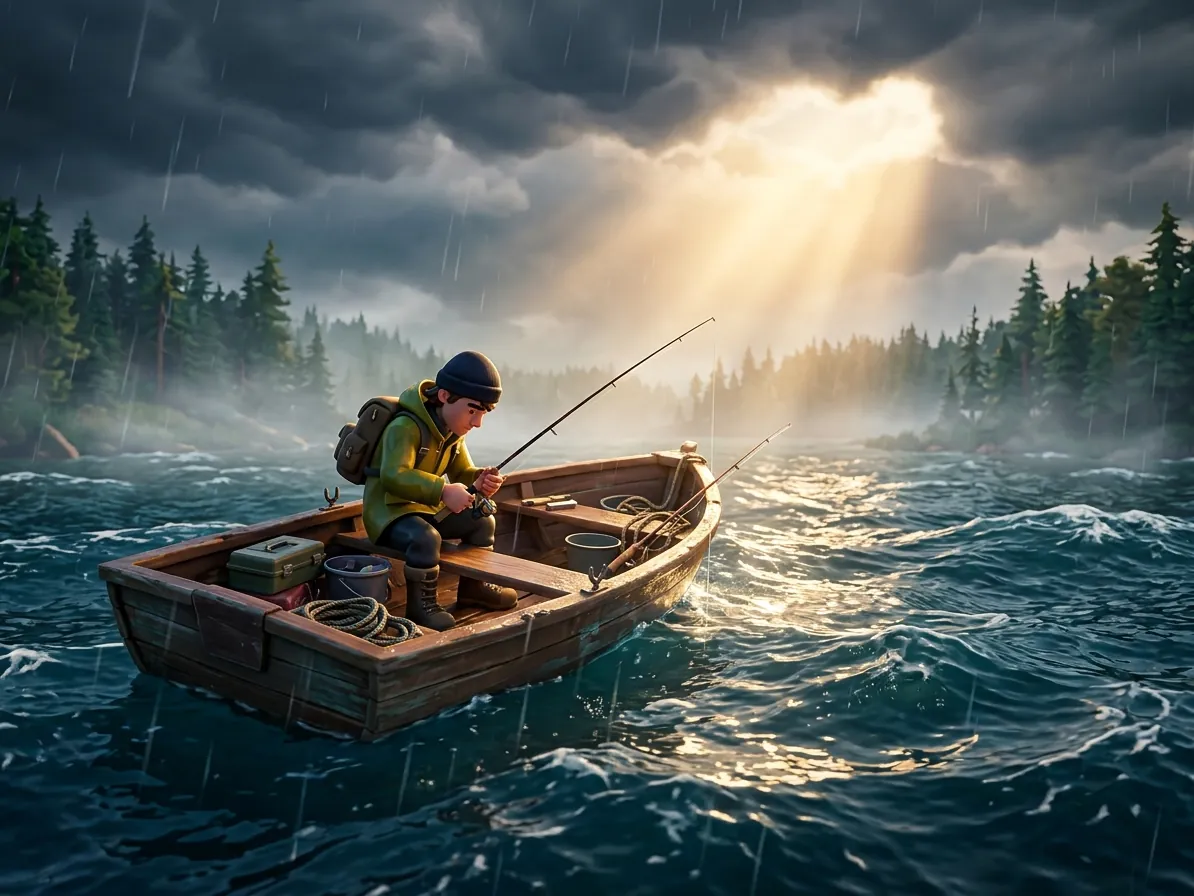
Weather changes such as clouds, wind, rain or temperature shifts can influence fish behaviour. Some players find that changes themselves, rather than any single type of weather, are worth paying attention to.
When the weather changes during a session, consider small adjustments. A lure might need to run at a different depth. A spot that was quiet might become active, or the reverse. This is a good moment to check whether your current approach still fits.
As always, change one thing at a time. If you switch spot, bait and depth at the same moment the weather turns, you will not know what made a difference.
Planning Sessions Around Conditions
Once you have some notes, use them to plan. If your records suggest your target has been more active in a certain period at a certain spot, schedule your main attempt for that window.
Use the quieter periods for preparation and exploration. Scout new spots, test baits on smaller fish of the same species or check the bottom structure. This way no time feels wasted, and you arrive at the key window ready.
Keep the plan flexible. Conditions in the game can change, and a strong plan should leave room to adapt when something unexpected happens.
Avoiding Superstition
It is easy to remember one great session and decide that the weather that day was the reason. One catch is not a pattern. Neither is one empty session.
To avoid building false rules, record conditions every time, including the sessions where nothing happens. Then look for patterns across many sessions. If a link holds up, it is worth using. If it disappears, let it go.
Also remember that game updates can adjust how conditions affect fish. A pattern you found some time ago may need checking again. Approaching conditions with curiosity rather than certainty keeps your planning honest and makes each discovery feel earned.
Related articles
 Keeping a Log of Every Big Fish Attempt
Practical tips on keeping a fishing log in Fishing Planet: what to record, a simple format and how to read patterns across many sessions.
Read more
 Preparing Tackle for a Big Fish Session
A practical guide to preparing rod, reel, line, leader and hooks for big fish in Fishing Planet, with a simple pre-session tackle check.
Read more
 Choosing Where and How to Fish for a Big One
How to research a location, read depth and structure and choose between active and passive tactics when hunting big fish in Fishing Planet.
Read more