Choosing Baits and Lures for Larger Fish
What you put on the hook shapes which fish come to it. This basics guide explains how to choose and test baits and lures when you are targeting size.
Size Sends a Signal
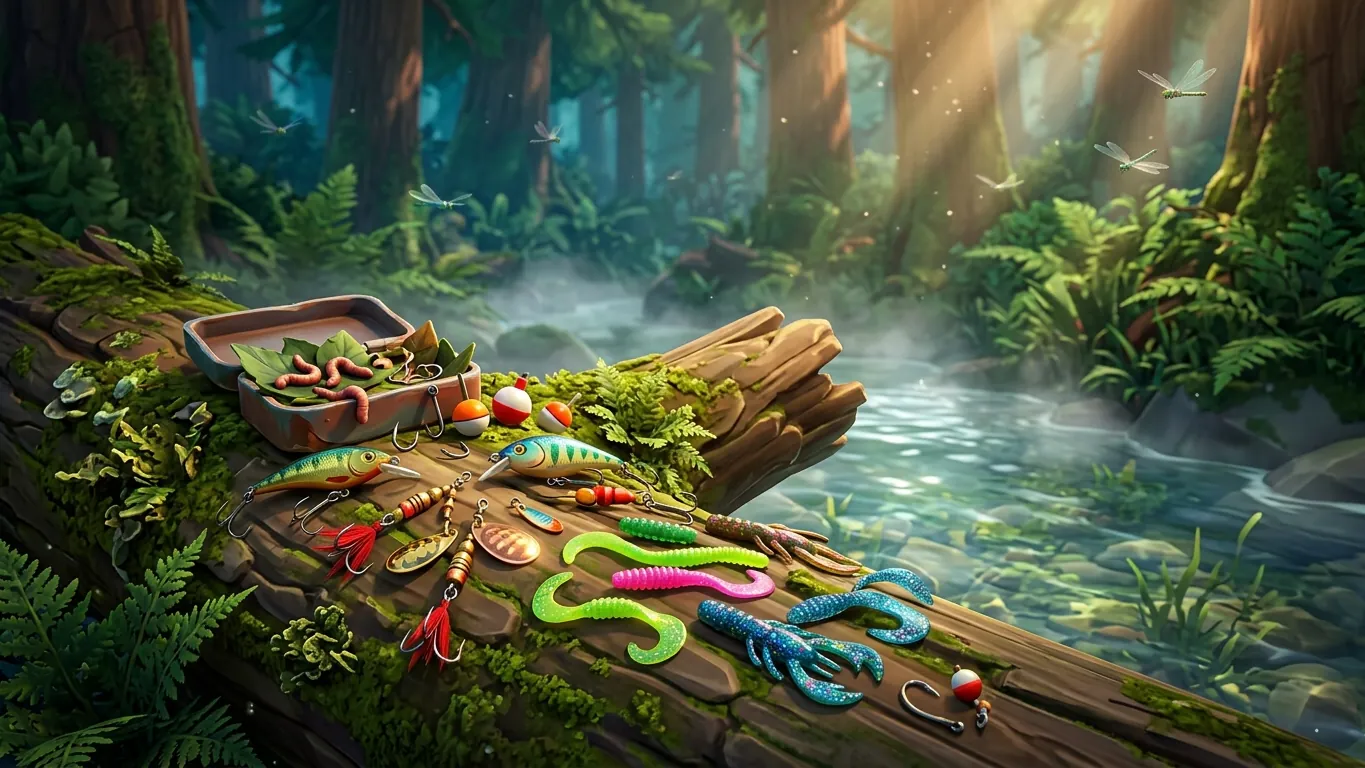
A general principle in fishing, and a useful starting point in the game, is that larger offerings tend to attract larger fish. Smaller baits may bring constant bites from smaller fish, which can be fun but can also occupy your line when a big fish passes by.
That does not mean the largest bait is always best. Some species respond better to moderate offerings, and very large baits can reduce bite frequency a lot. Check the in-game information for your target species and choose a size that fits what it eats.
The idea is to filter. You want your bait to be less appealing to small fish and still attractive to the one you are after.
Natural Baits
Natural baits suit float and bottom fishing, where you wait for the fish to find the offering. They are a common choice for fish that feed slowly or search the bottom.
When targeting size, consider baits that small fish struggle to take. Larger or tougher baits stay on the hook longer and give a big fish more time to find them. Combining a bait with an attractant or groundbait, where the game allows it, can help bring fish into your area.
Be patient with natural baits. Passive methods often need long waits, and frequent recasting can disturb the spot. Give each setup enough time before deciding it is not working.
Artificial Lures
Lures suit active fishing for predators. They let you cover water, search for reacting fish and adjust quickly to depth and speed.
Three factors matter most: size, depth and retrieve. Size filters fish, as above. Depth decides whether the lure passes through the zone where the fish holds. Retrieve style and speed decide whether the movement looks convincing.
Start with a lure that runs at the depth you expect your target to be. Try a steady retrieve first, then experiment with pauses, twitches and speed changes. Change only one variable at a time so you can tell what made a difference when a strong bite finally comes.
Hook Size and Presentation
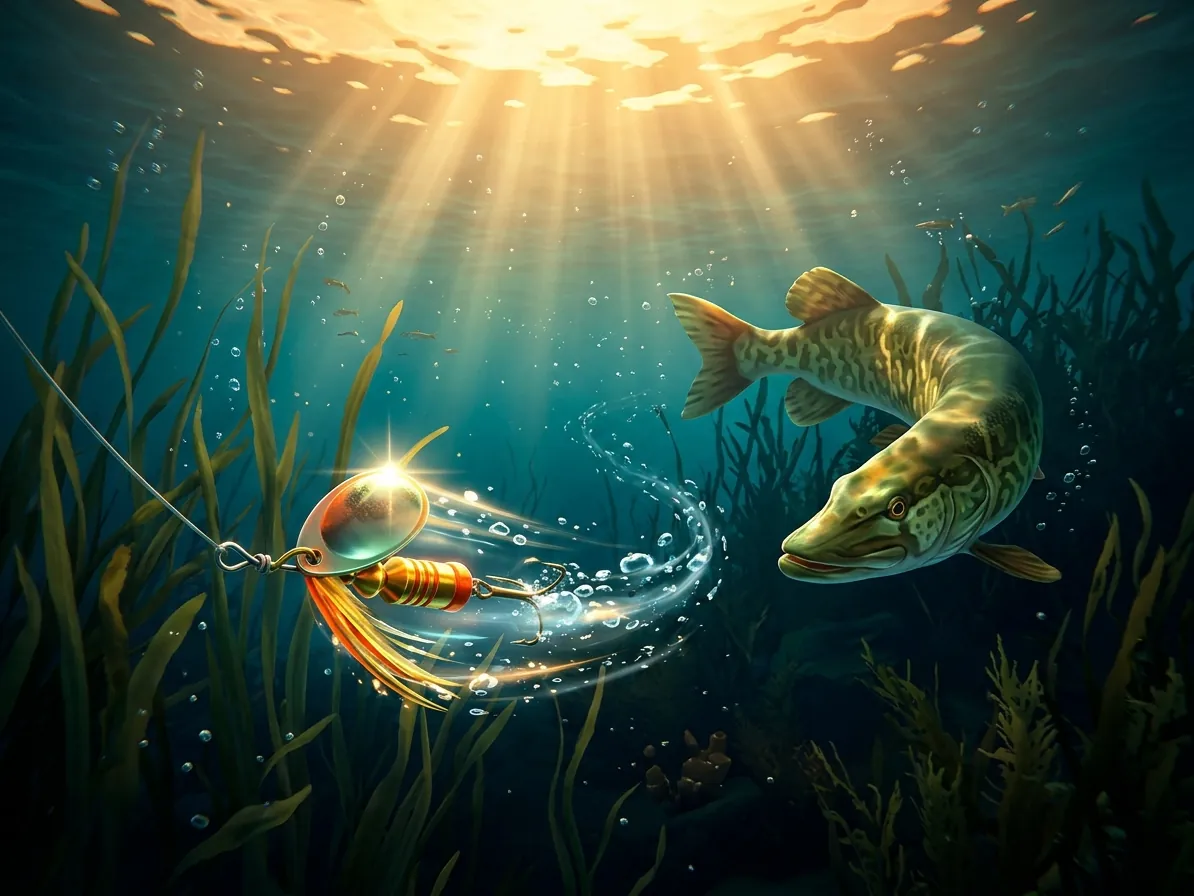
Hook size should match both the bait and the fish. A hook that is too small for a large fish may not hold well during the fight. A hook that is too large for the bait may make the presentation look unnatural or reduce bites.
Also consider how the bait sits. A well-presented bait at the right depth will usually outperform a perfect bait at the wrong depth. For float setups, adjust the depth carefully. For bottom setups, think about where food would naturally settle.
Hook choice ties directly to your tackle preparation. Make sure the hook, leader and line form a balanced chain, so one component does not become an unplanned weak point.
Testing Baits Systematically
A simple method helps you learn what works instead of guessing.
- 01
Pick a baseline
Choose one bait or lure that suits your target species and use it as your starting point.
- 02
Fish it long enough
Give the baseline a fair amount of in-game time before judging it.
- 03
Change one thing
Swap only the size, colour, depth or retrieve, never several at once.
- 04
Record the results
Note bites, catches, sizes and lost fish for each version you try.
- 05
Compare over sessions
Look for patterns across several sessions rather than trusting a single lucky bite.
Related articles
 Planning Around Time of Day and Weather
Tips on planning Fishing Planet sessions around time of day and changing weather when hunting big fish, without relying on superstition.
Read more
 Keeping a Log of Every Big Fish Attempt
Practical tips on keeping a fishing log in Fishing Planet: what to record, a simple format and how to read patterns across many sessions.
Read more
 Preparing Tackle for a Big Fish Session
A practical guide to preparing rod, reel, line, leader and hooks for big fish in Fishing Planet, with a simple pre-session tackle check.
Read more